


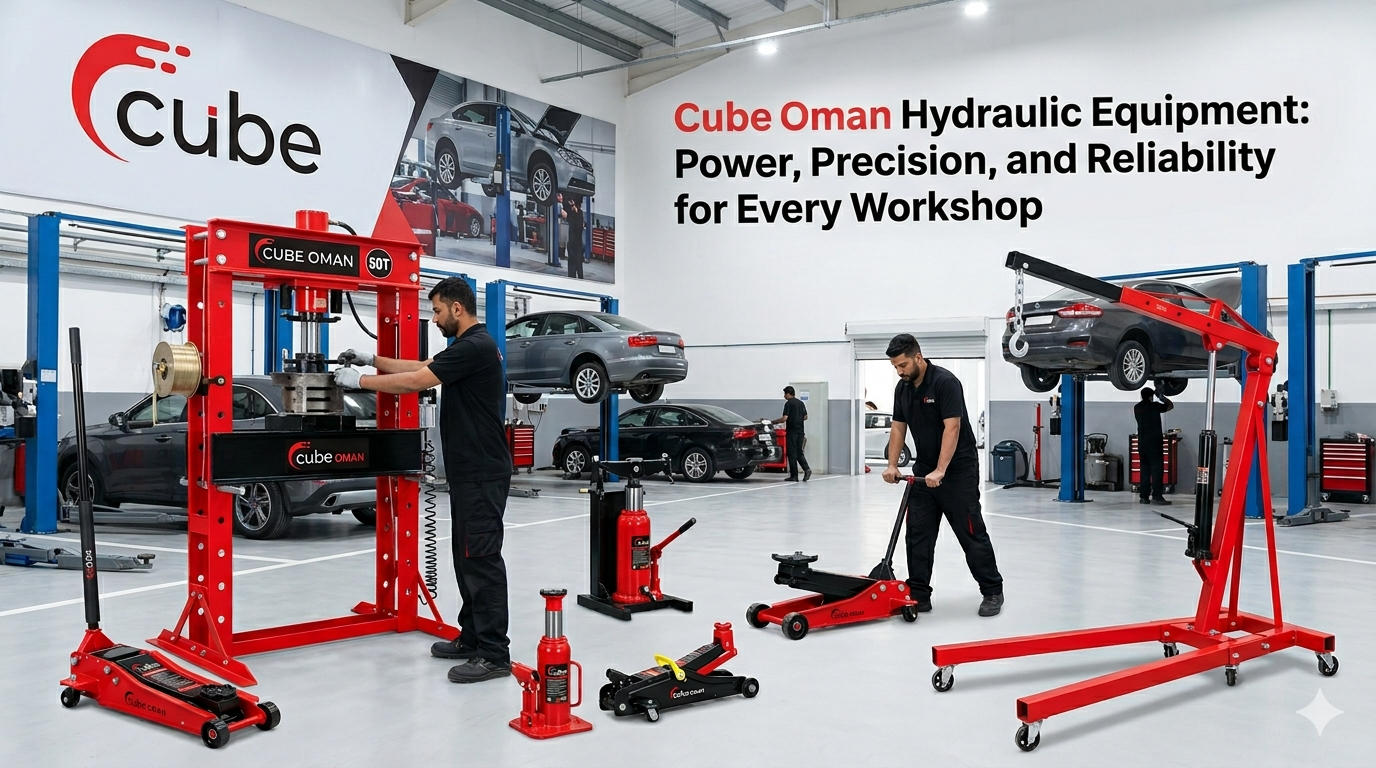
Hydraulic Equipment Power, Performance, and Precision for Modern Workshops
Hydraulic equipment plays a vital role in today’s automotive, industrial, and construction industries. Known for its ability to generate immense force using fluid pressure, hydraulic technology is widely used in applications where strength, control, and efficiency are essential.
What Is Hydraulic Equipment?
Hydraulic equipment refers to machines and systems that use pressurized fluid—typically oil—to perform mechanical work. These systems operate on the principle that force applied to a fluid is transmitted equally in all directions, allowing heavy loads to be lifted, moved, or compressed with ease.
Unlike traditional mechanical or electric systems, hydraulic systems can produce significantly higher (force) with greater precision and smoother operation.
Key Types of Hydraulic Equipment
Hydraulic equipment comes in various forms, each designed for specific industrial and automotive applications.
1. Hydraulic Jacks
Hydraulic jacks are widely used in automotive workshops to lift vehicles for maintenance and repair. They are compact, powerful, and capable of lifting heavy loads with minimal effort, making them essential for tyre changes and under body work.
2. Hydraulic Press Machines
Hydraulic presses are used for shaping, bending, and compressing materials. In automotive workshops, they are commonly used for bearing installation, metal forming, and component assembly.
3. Hydraulic Lifts
Hydraulic lifts are crucial in garages and service centers. They allow technicians to raise vehicles safely, improving accessibility and efficiency during repair and inspection processes.
4. Hydraulic Cylinders and Pumps
These are the core components of any hydraulic system. Cylinders convert fluid power into mechanical motion, while pumps generate the pressure required to operate the system.
5. Hydraulic Torque Tools
Used in heavy-duty applications, hydraulic torque wrenches provide precise tightening of bolts, ensuring safety and accuracy in industrial and construction environments.
Components of Hydraulic Systems
A complete hydraulic system consists of several interconnected components that work together to deliver power and control:
- Hydraulic Fluid: Transfers energy within the system
- Pump: Generates pressure
- Valves: Control flow and direction
- Cylinder/Motor: Converts energy into motion
- Hoses & Fittings: Transport fluid between components
These elements ensure smooth, efficient, and controlled operation across various applications.
Benefits of Hydraulic Equipment
Hydraulic systems offer several advantages that make them superior for heavy-duty operations:
✔ High Power Output
Hydraulic equipment can generate significantly more force compared to pneumatic or mechanical systems of similar size.
✔ Precision and Control
Operators can control speed, force, and movement with high accuracy, reducing errors and improving work quality.
✔ Durability and Reliability
Designed for tough environments, hydraulic systems can withstand heavy loads, extreme pressure, and continuous use.
✔ Efficiency in Heavy-Duty Tasks
Hydraulic equipment is ideal for lifting, pressing, and moving large objects with minimal manual effort.
Applications Across Industries
Hydraulic equipment is widely used across multiple sectors, including:
- Automotive Workshops: Vehicle lifting, repair, and maintenance
- Construction: Excavators, cranes, and loaders
- Manufacturing: Press machines and automation systems
- Oil & Gas: Drilling and offshore equipment
- Marine & Mining: Heavy machinery and material handling
Its versatility makes hydraulic technology a backbone of modern industrial operations.
Conclusion
Hydraulic equipment is an indispensable part of modern workshops and industrial facilities. Its ability to deliver high (power), precision, and efficiency makes it the preferred choice for professionals handling demanding tasks.
Whether it’s lifting a vehicle, pressing components, or powering heavy machinery, hydraulic systems provide reliable and consistent performance. Investing in high-quality hydraulic equipment ensures long-term productivity, safety, and operational success.