


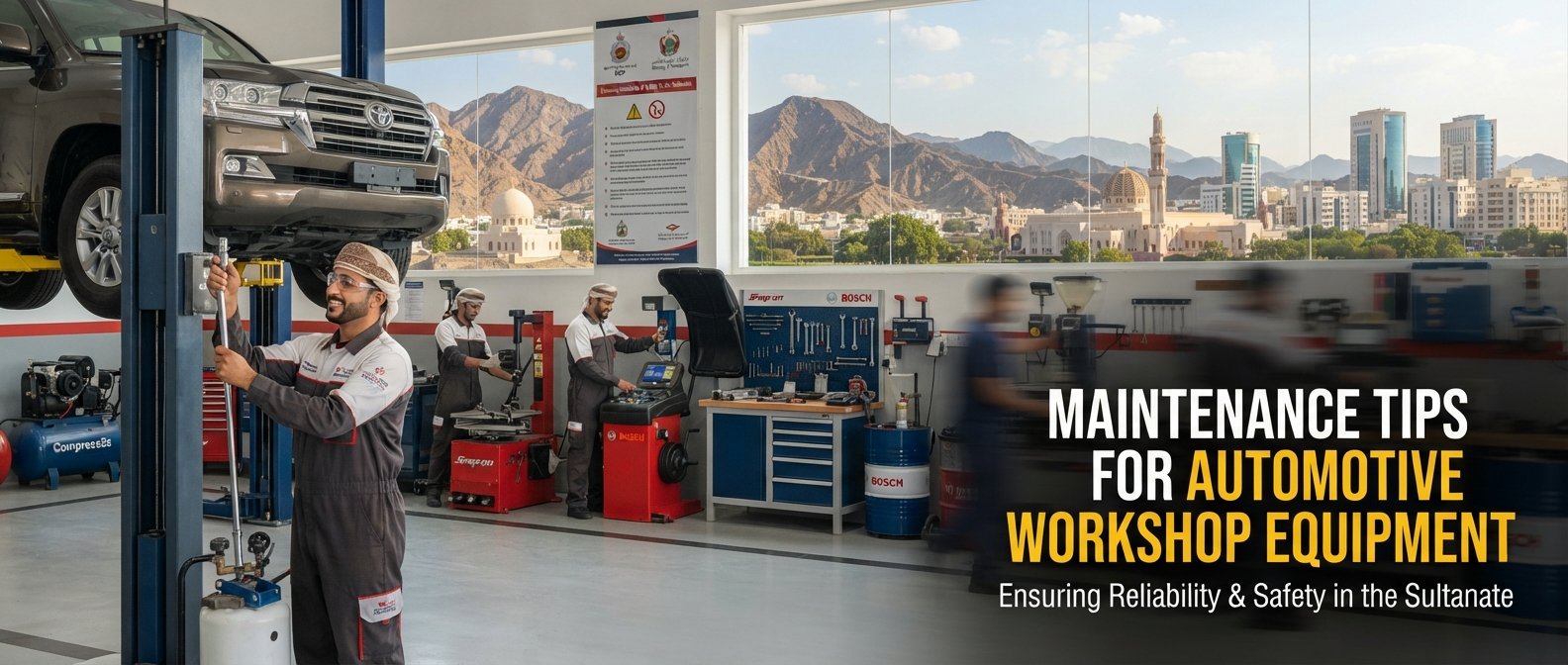
Maintenance Tips for Automotive Workshop Equipment
A professional automotive workshop depends on reliable equipment to deliver safe, accurate, and efficient vehicle services. From vehicle lifts and tyre changers to wheel balancers, wheel alignment machines, pressure washers, hydraulic equipment, and diagnostic tools, every machine plays an important role in daily workshop operations.
However, even high-quality equipment requires regular maintenance. Proper maintenance helps reduce unexpected breakdowns, improve equipment performance, extend service life, and create a safer working environment for technicians. Cube Oman offers a wide range of workshop and garage equipment, including vehicle lifts, tyre equipment, wheel balancers, wheel alignment systems, hydraulic equipment, pressure washers, lubrication equipment, and more.
Here are some practical maintenance tips for automotive workshop equipment.
1. Perform Daily Visual Inspections
A simple daily inspection can prevent many equipment problems. Before starting work, technicians should check machines for visible damage, loose bolts, leaks, unusual noises, worn components, or electrical issues.
Look around the equipment for:
- Hydraulic or oil leaks
- Damaged cables and hoses
- Loose nuts and bolts
- Cracked or worn components
- Unusual sounds or vibrations
- Dirt or debris affecting moving parts
If a problem is identified, the equipment should be taken out of service until it has been inspected and repaired by a qualified technician.
2. Maintain Vehicle Lifts Properly
Vehicle lifts are among the most important pieces of equipment in an automotive workshop. Because they support heavy vehicles, safety should always be the first priority.
Inspect lifting arms, locking mechanisms, hydraulic systems, cables, hoses, and mounting points regularly. Keep moving components properly lubricated according to the manufacturer’s recommendations.
Technicians should also make sure the lift is used only within its rated capacity and that vehicles are positioned correctly before lifting.
Never ignore unusual movement, hydraulic leakage, or problems with the safety locks.
3. Clean and Inspect Tyre Changers
Tyre changers are used frequently and can accumulate rubber particles, dirt, grease, and other debris. Regular cleaning helps maintain smooth operation and reduces unnecessary wear.
Clean the turntable, bead breaker, mounting head, clamps, and other working areas regularly. Check pneumatic hoses and connections for air leaks and inspect moving parts for signs of wear.
Using the correct lubricant and following the manufacturer’s service recommendations can also help maintain smooth and reliable operation.
4. Keep Wheel Balancers Calibrated
Wheel balancers require accuracy to provide reliable results. Dirt, vibration, incorrect mounting, or calibration problems can affect balancing accuracy.
Keep the machine clean and ensure wheels are mounted correctly. Check the balancing shaft, cones, adapters, and other accessories for damage or wear.
Periodic calibration should be performed according to the manufacturer’s recommended schedule. Accurate wheel balancing helps workshops provide consistent service and avoid unnecessary repeat work.
5. Maintain Wheel Alignment Equipment
Modern wheel alignment systems use precision sensors, cameras, targets, and electronic components. These systems should be kept clean and protected from unnecessary impact.
Clean alignment targets and sensors carefully and store accessories correctly when they are not being used. Avoid placing heavy objects on sensitive components.
Regular calibration and inspection are important for maintaining accurate alignment measurements. This is particularly important for professional workshops that perform wheel alignment services frequently.
6. Service Air Compressors and Pneumatic Systems
Compressed air is essential for many workshop operations. Air compressors should be inspected regularly for oil levels, filters, hoses, pressure levels, and leaks.
Drain accumulated moisture from the air tank according to the manufacturer’s instructions. Clean or replace air filters when required and inspect pneumatic connections for leakage.
A well-maintained compressed-air system can help pneumatic equipment operate more efficiently while reducing unnecessary energy consumption.
7. Check Hydraulic Equipment
Hydraulic jacks, presses, lifts, and other hydraulic equipment should be inspected regularly for fluid leaks, damaged hoses, worn seals, and abnormal operation.
Check hydraulic fluid levels and replace fluids according to the manufacturer’s maintenance schedule. Never use damaged hydraulic hoses or components.
Hydraulic equipment can operate under high pressure, so repairs and servicing should always be carried out safely and by qualified personnel.
8. Keep Equipment Clean
Dust, oil, grease, metal particles, and workshop debris can affect equipment performance. A clean workshop environment makes it easier to identify leaks, damage, and other problems before they become serious.
At the end of each working day, clean equipment surfaces and remove debris from working areas. Electrical and electronic equipment should be cleaned using methods recommended by the manufacturer.
9. Follow the Manufacturer’s Maintenance Schedule
Every machine has different maintenance requirements. Instead of using the same maintenance routine for every piece of equipment, follow the manufacturer’s operating and servicing instructions.
Keep records of:
- Inspection dates
- Servicing completed
- Parts replaced
- Calibration dates
- Repairs performed
- Next scheduled maintenance
A maintenance log helps workshop managers monitor equipment condition and plan servicing before problems cause unexpected downtime.
10. Train Workshop Staff
Proper equipment operation is just as important as maintenance. Technicians should understand how to use each machine correctly and know its operating limits.
Training should cover equipment operation, safety procedures, cleaning, basic inspections, and reporting faults. Only trained personnel should operate specialized machinery.
Conclusion
Regular maintenance is an investment in workshop productivity, safety, and long-term equipment performance. Vehicle lifts, tyre changers, wheel balancers, wheel alignment machines, hydraulic equipment, compressors, and other workshop machines can provide reliable service for many years when they are inspected, cleaned, calibrated, and serviced correctly.
For automotive workshops in Oman, choosing reliable equipment and following a structured maintenance program can help reduce downtime and improve service quality. Cube Oman provides a comprehensive range of professional automotive workshop equipment designed to support modern garages and service centers across Oman.
Looking for reliable automotive workshop equipment in Oman? Explore Cube Oman’s range of professional garage and workshop solutions, including vehicle lifts, tyre changers, wheel balancers, wheel alignment equipment, hydraulic tools, pressure washers, and more.